
NEWS
Amid escalating Red Sea security risks and sustained rerouting of container vessels around the Cape of Good Hope, freight rates on key Asia–Europe trade lanes have surged to record levels. According to a joint report released on May 14, 2026 by the Shanghai Shipping Exchange and Drewry, the Far East–North Europe route spot rate for a 40-foot equivalent unit (FEU) reached $5,820 — up 142% year-on-year. The disruption is now directly impacting lead times and contractual terms across China’s power generation equipment export sector.
Event Overview
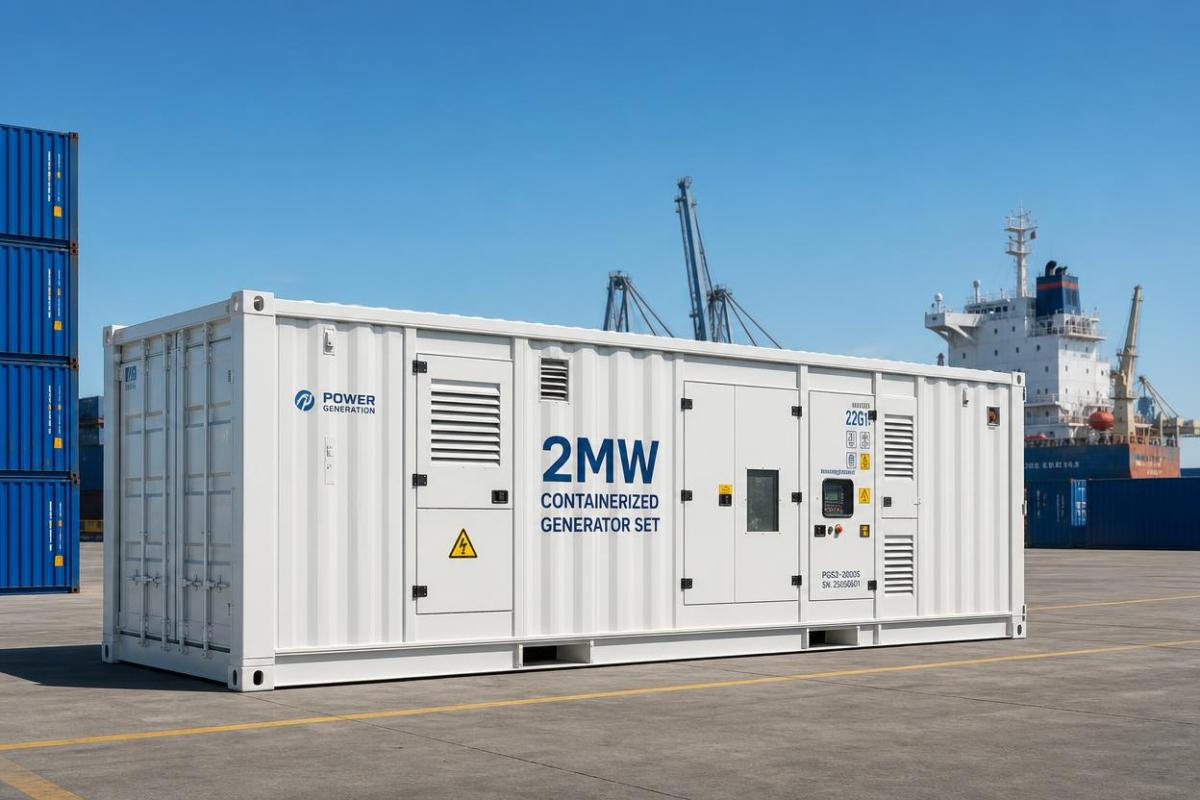
Per the May 14, 2026 joint report from the Shanghai Shipping Exchange and Drewry: the Far East–North Europe spot freight rate stood at $5,820/FEU; Suez Canal transit quotas have tightened further; average vessel schedule delays for containerized power generation units departing from Qingdao, Ningbo, and Nansha ports to the Middle East and Europe range from 12 to 18 days; and export enterprises in Yangzhou and Weifang confirm that delivery timelines for 2 MW containerized power plants have extended from an original 45 days to 65–70 days. Some buyers are now negotiating CIF contracts with delay compensation clauses.
Industries Affected
Direct Exporters
Manufacturers exporting containerized power generation systems — especially those targeting European and Middle Eastern markets — face direct pressure on order fulfillment, cash flow, and customer retention. Extended shipping delays translate into longer working capital cycles and increased demurrage or detention exposure at destination ports. The shift toward CIF+Delay Compensation clauses also signals growing buyer-side risk transfer, requiring exporters to reassess margin buffers and insurance coverage.
Raw Material Procurement Entities
Firms sourcing critical components — such as diesel engines, inverters, battery modules, or switchgear — from overseas suppliers (e.g., EU-based Tier-1 component makers) are encountering longer inbound lead times and higher landed costs. Delays compound when imported parts arrive late relative to domestic assembly schedules, triggering production bottlenecks. Procurement teams must now factor in extended ocean transit windows and potential customs clearance variability at congested transshipment hubs like Piraeus or Rotterdam.
Equipment Manufacturers
Original Equipment Manufacturers (OEMs) integrating generators, control systems, and energy storage into skid-mounted or ISO-containerized solutions are experiencing cascading schedule slippage. With outbound logistics no longer predictable, just-in-time (JIT) production planning becomes untenable. Many are shifting to safety-stock strategies for high-turnover subassemblies — increasing inventory carrying costs and warehouse utilization pressure.
Logistics & Supply Chain Service Providers
Freight forwarders, NVOCCs, and customs brokers serving the power equipment sector report rising client demand for multimodal alternatives (e.g., rail-ferry combinations via Central Asia or overland routes to Türkiye), though capacity remains constrained and documentation complexity has grown. Insurance underwriters are revising war-risk premiums for Red Sea transits, while port agents note increased scrutiny of cargo manifests and vessel routing data — adding administrative overhead and turnaround time.
Key Considerations and Recommended Actions
Reassess Incoterms and Risk Allocation
Exporters should review current FOB vs. CIF usage and evaluate whether incorporating delay compensation mechanisms — with clearly defined triggers, caps, and force majeure carve-outs — better aligns with operational realities. Legal counsel should verify enforceability across target jurisdictions, particularly where local courts lack precedent on maritime force majeure claims.
Map and Stress-Test Alternative Routing Options
While Cape Horn and Central Asian rail corridors offer partial relief, their transit times, infrastructure reliability, and intermodal handoff points vary significantly. Companies should pilot small-volume shipments via these routes to benchmark actual dwell times, documentation friction, and cost differentials before scaling.
Strengthen Visibility Across Tier-2+ Suppliers
Given that upstream component delays can amplify downstream delivery risk, manufacturers should extend digital supply chain visibility tools (e.g., shared TMS dashboards or EDI integrations) beyond Tier-1 partners to include key foreign component vendors — enabling earlier detection of port congestion or inland transport snarls.
Editorial Insight / Industry Observation
Observably, the Red Sea crisis is no longer a short-term shock but a structural inflection point for global power equipment logistics. Analysis shows that the $5,800/FEU threshold reflects not only physical rerouting costs but also market pricing of persistent uncertainty — including geopolitical volatility, regulatory tightening at chokepoints, and reduced carrier flexibility. From an industry perspective, this environment favors vertically integrated exporters with diversified port access and in-house logistics arms. It also accelerates adoption of modular design principles (e.g., pre-commissioned subsystems shipped separately) to decouple manufacturing from final integration timing. Current more relevant than ever is the distinction between ‘logistical resilience’ — measured in redundancy and response speed — and ‘logistical efficiency’ — measured in cost and cycle time alone.
Conclusion
The sustained freight escalation and schedule erosion underscore a broader recalibration in how power generation equipment moves across continents. Rather than treating shipping delays as temporary anomalies, stakeholders must embed contingency into product development, contract design, and supplier governance. A rational conclusion is that competitive advantage will increasingly accrue to firms that treat logistics not as a cost center, but as a strategic capability — one that balances responsiveness, transparency, and contractual agility.
Source Attribution
Primary source: Joint report by Shanghai Shipping Exchange and Drewry, published May 14, 2026. Data cited includes Far East–North Europe FEU spot rate ($5,820), Suez Canal quota constraints, port-specific delay metrics (Qingdao/Ningbo/Nansha), and verified delivery extensions for 2 MW containerized power plants. Note: Ongoing monitoring is advised for updates on Suez Canal policy revisions, U.S./EU sanctions enforcement related to Houthi-linked entities, and carrier capacity adjustments on Asia–Mediterranean services.